If your workdays move fast, your home needs to keep up. In Westshore, condo living can make daily life simpler by putting major job centers, shopping, airport access, and low-maintenance housing in one part of Tampa. If you are weighing whether that trade-off fits your routine, this guide will help you look beyond the lobby and into the details that matter most. Let’s dive in.
Why Westshore works for busy professionals
Westshore stands out because it brings work, errands, and travel convenience close together. The Westshore Alliance describes the district as the region’s largest commercial market, with more than 6,500 businesses, 100,000 employees, and 15.3 million square feet of office space, along with about 15,000 residents.
That scale matters if you want to cut friction out of your day. Instead of planning your life around long drives, you can focus on a location built around jobs, services, and everyday convenience.
Commute and travel advantages
For many buyers, the biggest draw is access. The City of Tampa notes that Tampa International Airport is about six miles west of downtown, and the airport area includes Westshore Plaza.
That makes Westshore especially appealing if you travel often for work or want an easier trip for family visits. Tampa International Airport also offers nonstop flights to roughly 80 destinations, which can be a major quality-of-life benefit if your schedule includes frequent flights.
Getting around by car is also straightforward. The City of Tampa identifies I-275 and I-4 as major routes into Tampa, while Westshore’s transportation information notes that HART serves the district with five routes and also promotes vanpool and carpool options.
Daily errands stay close
Convenience is not just about the office. Westshore also keeps shopping and day-to-day tasks within reach, including more than 350 shops at WestShore Plaza and International Plaza.
If you are balancing work, fitness, dining, and errands in the same week, that kind of access can save real time. It can also make condo living feel more practical if you prefer less yard work and more proximity.
What condo living looks like in Westshore
Westshore is not a one-style housing market. According to the district’s housing guide, the area includes apartments, condominiums, townhomes, and single-family homes.
For condo buyers, that means you may see everything from more established buildings to newer projects with amenity-heavy designs. The more recent and higher-end options often focus on features that support a busy lifestyle.
Common time-saving features
In Westshore condos, buyers are likely to see amenities such as:
- Secure parking
- Elevator access
- Package handling or secured package storage
- Fitness spaces or wellness areas
- Concierge service
- Resident social areas
- Bicycle storage
- Guest accommodations in some communities
These features can help reduce small daily hassles. Over time, those conveniences may matter just as much as square footage.
Newer projects show the trend
Two current examples illustrate where the market is headed. AQUA at Westshore Yacht Club highlights features such as private elevators, a two-car garage plus one covered guest space, smart technology, and designer-curated finish packages.
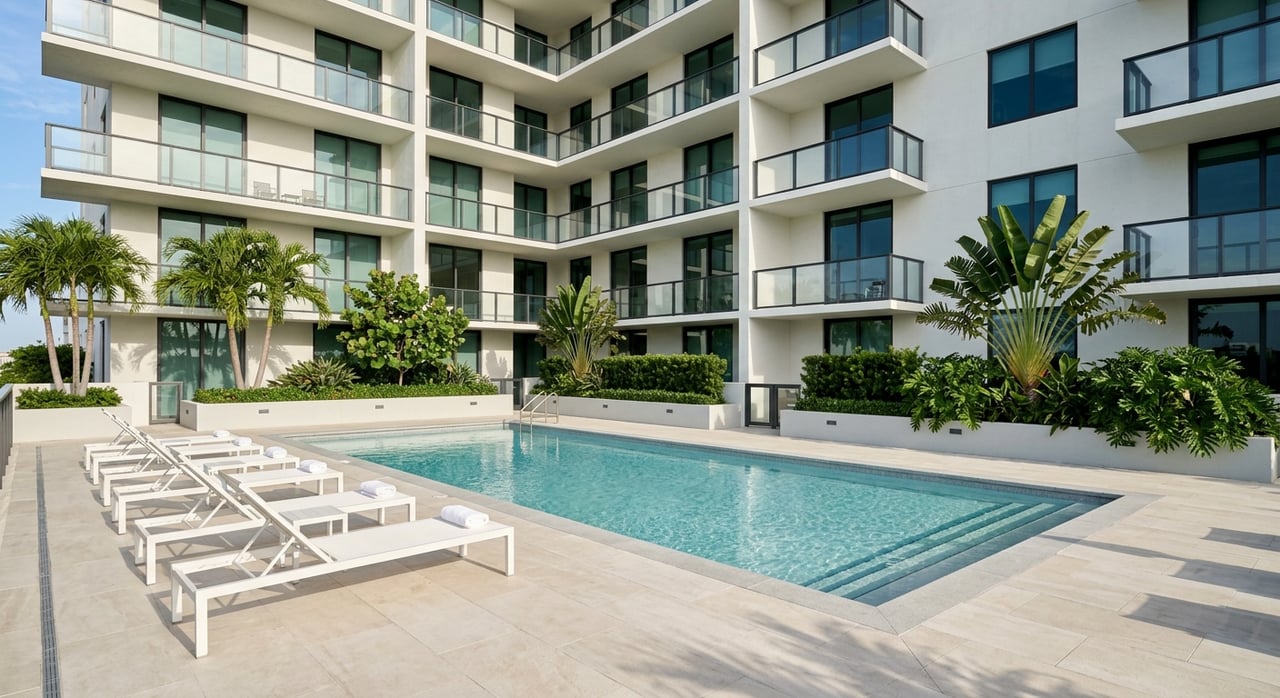
Marina Pointe, in the broader Westshore Marina District, promotes a 24/7 concierge, business room, private dining and entertaining space, secured package storage, bicycle storage, guest suites, a wellness center, outdoor yoga area, oversized pool deck, heated pool, spa, dog park, landscaped trails, and semi-private elevator access. It also describes the Westshore Marina District as a 52-acre waterfront destination with 1.5 miles of waterfront, trails, marina access, and a town center.
The practical takeaway is simple. In Westshore, condo living often trades private yard space for shared amenities, convenience, and a more service-oriented lifestyle.
Why newer Westshore areas can feel more walkable
Local planning rules help explain the look and feel of newer development. The City of Tampa’s Westshore overlay standards emphasize sidewalk continuity, pedestrian access, open-space requirements, and design treatment or screening for parking structures.
That does not mean every block or building will feel equally walkable. It does suggest that local development standards are aimed at creating a more pedestrian-oriented environment than a typical car-only layout.
The condo documents you should review carefully
If you are buying a condo in Westshore, the unit is only part of the purchase. You are also buying into an association, its budget, its maintenance approach, and its long-term planning.
Florida law gives resale condo buyers access to a substantial set of documents. At the seller’s expense, a prospective buyer is entitled to current copies of the declaration, articles of incorporation, bylaws and rules, an annual financial statement and annual budget, the inspector-prepared summary of the milestone inspection report if applicable, and the association’s most recent structural integrity reserve study, or a statement that no study has been completed.
Ask for official records, not just marketing materials
The glossy brochure is not enough. Under Florida law, official records include items such as:
- Declarations, bylaws, and rules
- Meeting minutes
- Current insurance policies
- Management agreements
- Accounting records, audits, and financial reports
- Structural integrity reserve studies
- Contracts and bids
- Inspection reports
- Building permits and related plans
Associations generally must make official records available within 10 working days after a written request. That paper trail can tell you far more than a model unit ever will.
Why reserves matter so much
When you review a condo budget, reserves should get your full attention. Florida law requires reserve accounts for capital expenditures and deferred maintenance, including roof replacement, building painting, and pavement resurfacing, plus other qualifying items above the statutory threshold.
For associations that must obtain a structural integrity reserve study, reserve amounts for covered items must follow the study’s findings and recommendations. For budgets adopted on or after December 31, 2024, unit-owner-controlled associations that are required to obtain a SIRS may not vote to underfund or waive the required reserves for listed structural items.
For you as a buyer, this matters because reserve strength can affect future costs. A building that keeps up with funding and maintenance may be better positioned to avoid deferred repairs and surprise assessments.
Inspection history matters in taller buildings
In Westshore, many condo buildings are three stories or higher, so structural review timelines can be especially relevant. Florida law requires a structural integrity reserve study at least every 10 years for qualifying buildings.
That study covers key components such as the roof, structure, fireproofing and fire protection systems, plumbing, electrical systems, waterproofing and exterior painting, windows and exterior doors, plus other items over $10,000 that affect those systems. Separately, milestone inspections are required for qualifying buildings that are three stories or higher at 30 years of age and every 10 years after that, with earlier deadlines for some older buildings.
This is one reason buyers should look beyond finishes. A beautiful lobby does not replace solid records, current studies, and a realistic maintenance plan.
Westshore risk checks at the exact address
In a coastal Florida market, location-specific risk checks are essential. Hillsborough County says flooding is its most costly and repetitive natural disaster.
The City of Tampa also stresses that flood zones and evacuation zones are not the same thing. Evacuation zones relate to storm surge and evacuation orders, while flood zones relate to property flood risk, insurance, and building requirements.
What to verify before you buy
For any Westshore condo you are considering, make sure you check:
- The exact flood zone for the property
- The evacuation zone, if any
- The association’s current insurance policies
- Inspection reports and structural studies
- Budget and reserve funding levels
Hillsborough County evacuation zones are labeled A through E, and some areas are outside a zone entirely. That is why it is important to verify the specific address rather than assume the same risk profile applies across all of Westshore.
How to decide if Westshore condo living fits you
Westshore is best for buyers who value efficiency, access, and lower day-to-day upkeep. If your ideal home life includes faster commutes, easier airport trips, nearby shopping, and shared amenities instead of exterior maintenance, the area may be a strong fit.
At the same time, condo buying requires more document review than many buyers expect. In Westshore, the smartest decision usually comes down to the full picture: location, parking, building operations, reserve funding, inspection history, and flood or insurance exposure.
If you want a home that supports a busy schedule, Westshore can deliver real convenience. The key is making sure the building works as well as the location.
If you are comparing condos in Westshore or anywhere in central Tampa, working with a local team can help you sort through the details with confidence. To talk through your options, connect with Yari Balmaseda.
FAQs
What makes Westshore condo living appealing for busy professionals?
- Westshore offers close access to a major employment district, shopping, major roadways, public transit options, and Tampa International Airport, which can make daily routines more efficient.
What condo amenities are common in Westshore Tampa buildings?
- Buyers may see features such as secure parking, elevator access, package handling, concierge service, fitness or wellness spaces, bicycle storage, and resident social areas.
What documents should you review before buying a Westshore condo?
- You should review the declaration, articles of incorporation, bylaws and rules, annual financial statement, annual budget, milestone inspection summary if applicable, and the structural integrity reserve study or notice that no study has been completed.
Why do condo reserves matter when buying in Westshore?
- Reserve funding can affect how well a building keeps up with major repairs and whether owners may face deferred maintenance issues or future special assessments.
How do flood zones and evacuation zones differ for Westshore condos?
- Flood zones relate to property flood risk, insurance, and building requirements, while evacuation zones relate to storm surge and evacuation orders during emergencies.
What should you verify at a specific Westshore condo address?
- You should verify the exact flood zone, evacuation zone, insurance records, inspection history, and the association’s budget and reserve funding for that building.